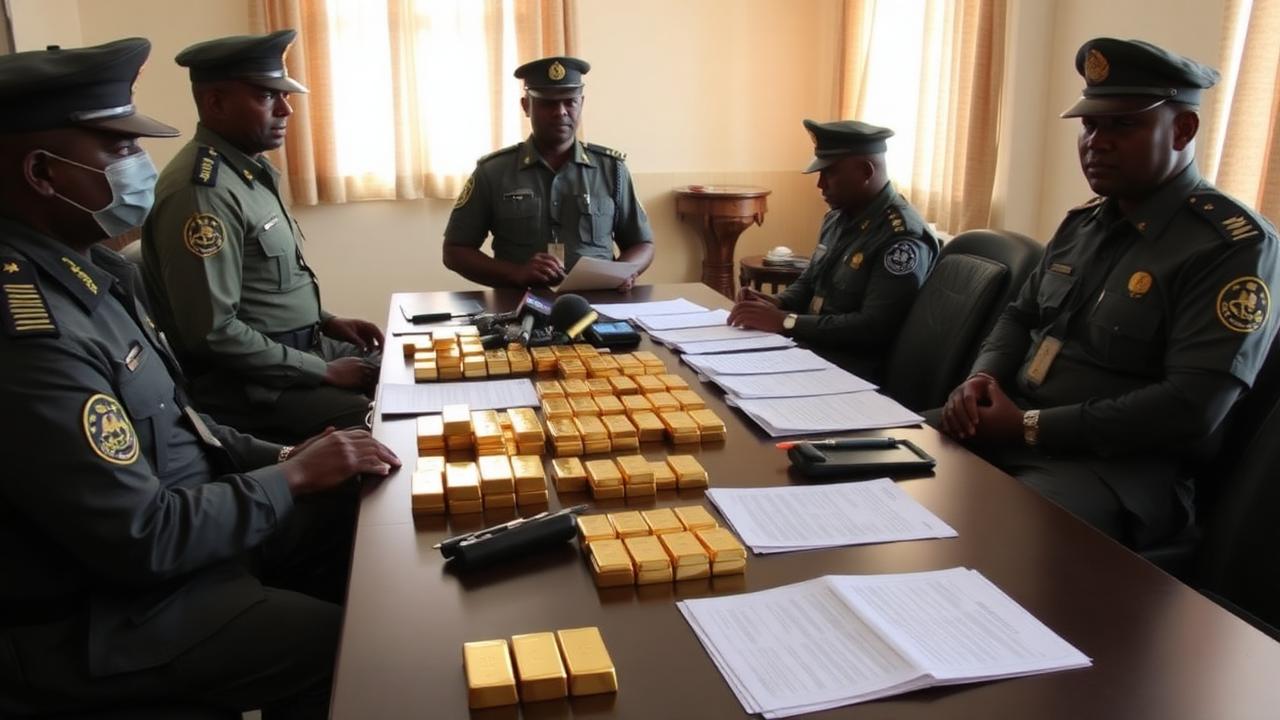
The State House Investors Protection Unit (SHIPU), working with the Police Mineral Protection Unit, has presented a suspect it says is central to an alleged gold export fraud running to about 450,000 US dollars. The complainant, an Indian-British investor, says he was induced from 2024 onwards to finance consignments of gold that were promised in the thousands of kilogrammes and never delivered.
None of the allegations has been tested in court. The suspect has not entered a plea, and UMT is naming no one beyond what has been said at an official briefing.
01Why this pattern keeps coming back
The structure described by investigators is familiar from UMT's earlier reporting on shell refineries and Kampala fixers: an intermediary presents licences or storage documents, a foreign buyer wires an advance, and the paperwork proves either forged or attached to a company with no production behind it. The volumes offered are usually the clearest warning sign. Quantities in the thousands of kilogrammes exceed what any single Ugandan producer can lawfully move.
02What a buyer can check before wiring money
Truth be told, two public checks would defeat most of these schemes. The Directorate of Geological Survey and Mines cadastre shows whether a company holds a mineral right at all and whether that right is granted or merely pending. The mineral dealer and export licensing regime under the Mining and Minerals Act 2022 governs who may lawfully export refined gold. Neither check requires a lawyer, and neither is routinely done by the victims in these cases.
03The state's own exposure
There is a counter-argument worth stating. Publicised arrests are not the same as prosecutions, and the sector's record of converting fraud investigations into convictions is thin. Investor protection units also carry a structural tension: they exist partly to reassure foreign capital, which is not always the same objective as prosecuting without fear or favour.
04What to watch
UMT will follow whether charges are filed, in which court, and whether the export documentation cited by the complainant is entered into evidence. We have written to SHIPU for the case reference and will publish it when it is confirmed. We shall keep following this one.
How we verified this: licence and production details are checked against official records and ministry statements where they exist. Corrections are welcome through our contact page.
Receive our monthly briefings on Uganda's mineral licensing and cadastre updates.
One email each month: new licences and renewals on the DGSM cadastre, community agreement filings, and the field research we publish. No sponsors, no advertising.