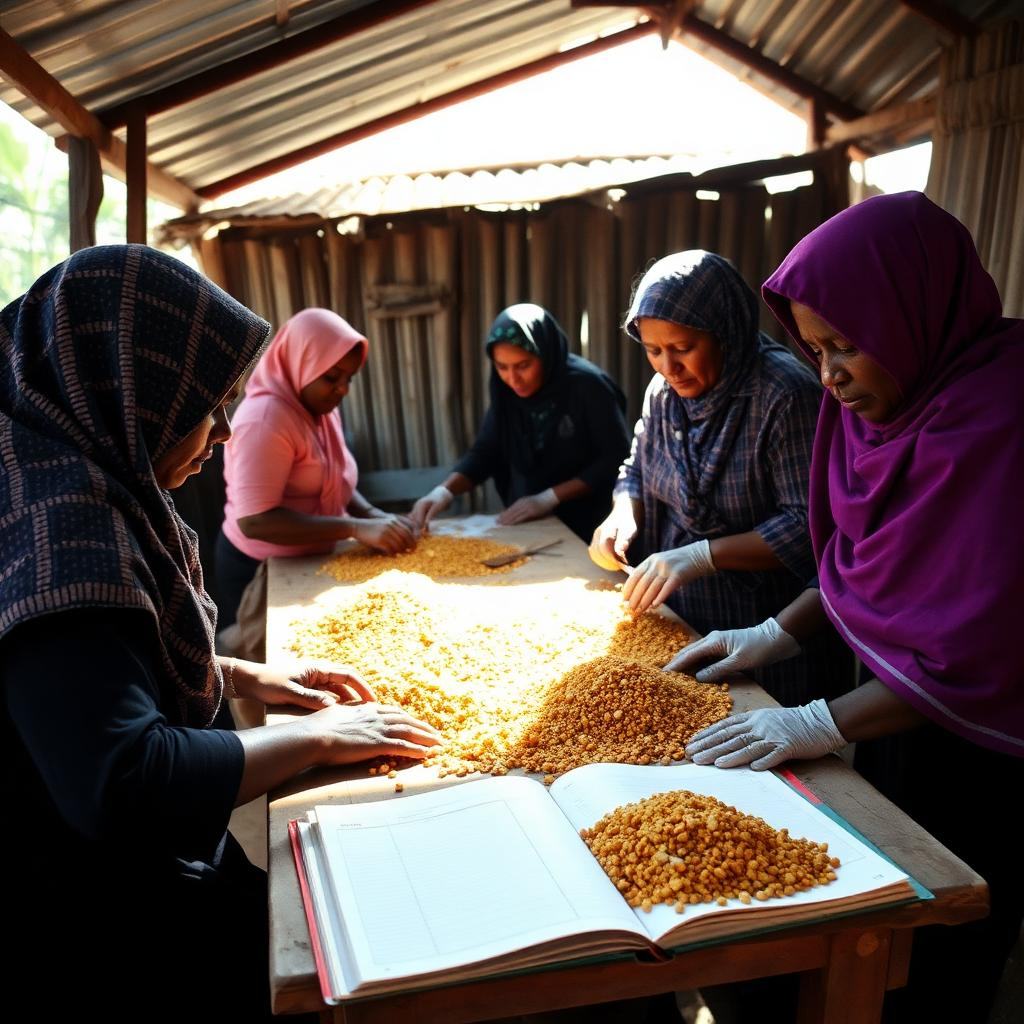
Women have always worked Uganda's gold sites, mostly in ore washing and trucking, the lowest-paid tasks in the chain. Cooperatives in Mubende and Busia are now holding licences, running processing equipment and negotiating sales directly.
01What changed
Two things: the artisanal category in the 2022 Act gave groups a legal form to hold assets, and training programmes attached to formalisation projects were opened to women's groups specifically rather than to sites generally.
02The finance ceiling
Equipment finance remains the binding constraint. Cooperatives without land title cannot secure conventional loans, and the equipment leasing products that would fit this sector barely exist in Uganda.
03Safety and childcare
Truth be told, Site-level childcare arrangements, organised informally by the cooperatives themselves, are the reason many members can work full shifts. No policy framework recognises or supports them.
04Where this goes
The cooperatives that have moved into assaying and direct sales report incomes several times those of washing labour. That is the strongest available argument for funding the next cohort, and it does not depend on any social case at all. We shall keep following this one.
How we verified this: licence and production details are checked against official records and ministry statements where they exist. Corrections are welcome through our contact page.
Receive our monthly briefings on Uganda's mineral licensing and cadastre updates.
One email each month: new licences and renewals on the DGSM cadastre, community agreement filings, and the field research we publish. No sponsors, no advertising.