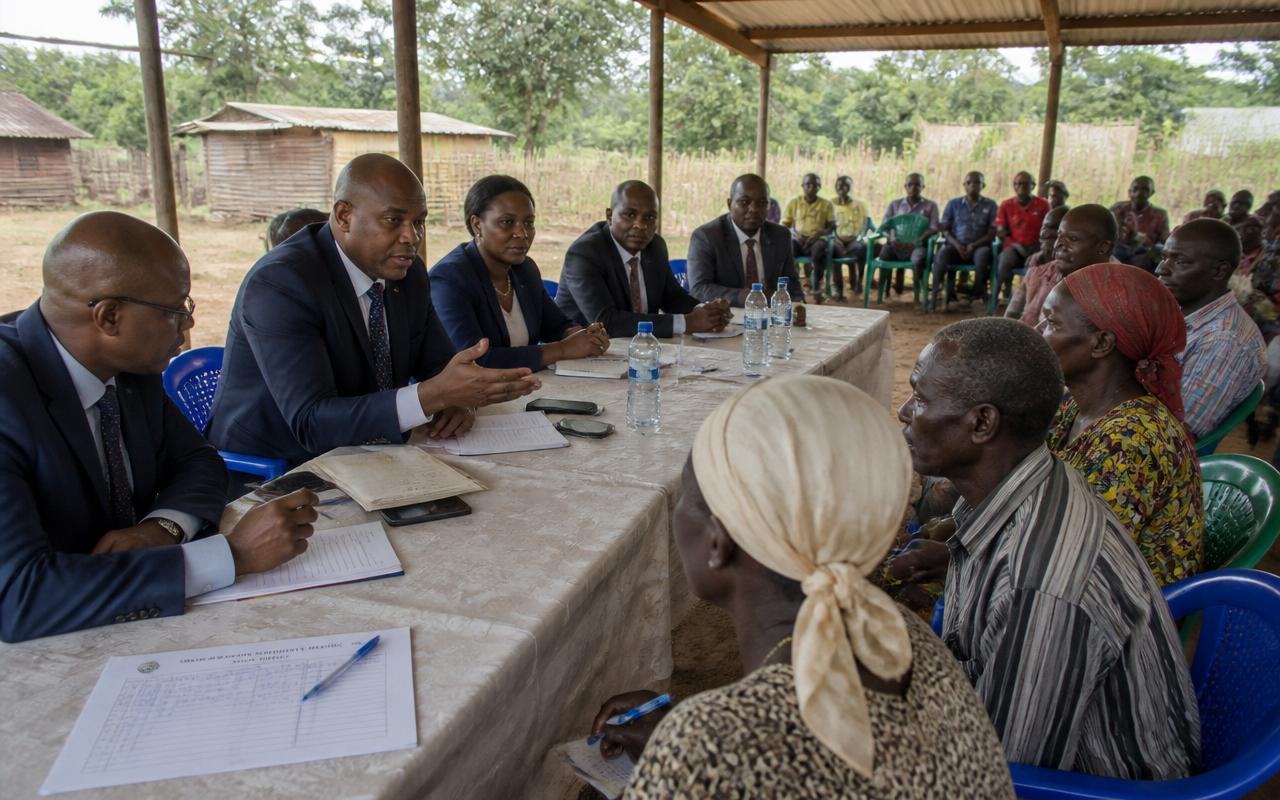
The Uganda Parliamentary Alliance on Food and Nutrition Security, working in partnership with OXFAM, visited Busia District in mid-2023 on a fact-finding mission following complaints about the effects of gold mining activity on local land, food security and livelihoods.
MPs on the delegation called on the Ministry of Lands, Housing and Urban Development to accelerate community sensitisation on land rights - including on how compensation should be assessed, what customary tenure protections still apply, and how households can challenge unfair valuations.
The alliance's recommendations point to a persistent gap between the letter of the Mining and Minerals Act 2022 and the practical experience of rural households negotiating with well-resourced concession holders. Closing that gap is not optional if the sector is to keep its social licence.
01What the members found
Truth be told, the delegation's concern was less about the legality of the concession than about what residents understood it to mean. Members reported households that did not know the difference between a surface interest and a mineral right, did not know that compensation is assessed by district land boards, and did not know where to lodge a claim if they disagreed with a valuation.
02The legal position residents are not told
Under Ugandan law minerals belong to the state, and a mineral right does not extinguish lawful occupancy. Occupiers are entitled to compensation for disturbance, crops and structures, and the Mining and Minerals Act 2022 requires the holder to reach agreement or follow a defined process before entering land. In practice the negotiation is between a company with lawyers and a household without one.
03Why sensitisation alone is not enough
On the ground, information campaigns are the standard response and the cheapest. They do not address the underlying asymmetry: a resident who now understands their rights still needs someone to assert them. District land offices and legal aid providers in Busia are thinly staffed, and neither the alliance's recommendations nor the ministry's response addressed that resourcing gap.
04Counter-argument
The company's position, and it is not unreasonable, is that it has met the compensation requirements set by the district and cannot be responsible for gaps in public legal education. UMT has not seen evidence of compensation being withheld from a determined claim. The complaint recorded here is about process and understanding, not about a proven failure to pay.
05What to watch
Whether the Ministry of Lands funds the sensitisation it was asked to run, how many compensation disputes from Busia reach the district land tribunal, and whether any resettlement agreements are published. We shall keep following this one.
How we verified this: licence and production details are checked against official records and ministry statements where they exist. Corrections are welcome through our contact page.
Receive our monthly briefings on Uganda's mineral licensing and cadastre updates.
One email each month: new licences and renewals on the DGSM cadastre, community agreement filings, and the field research we publish. No sponsors, no advertising.