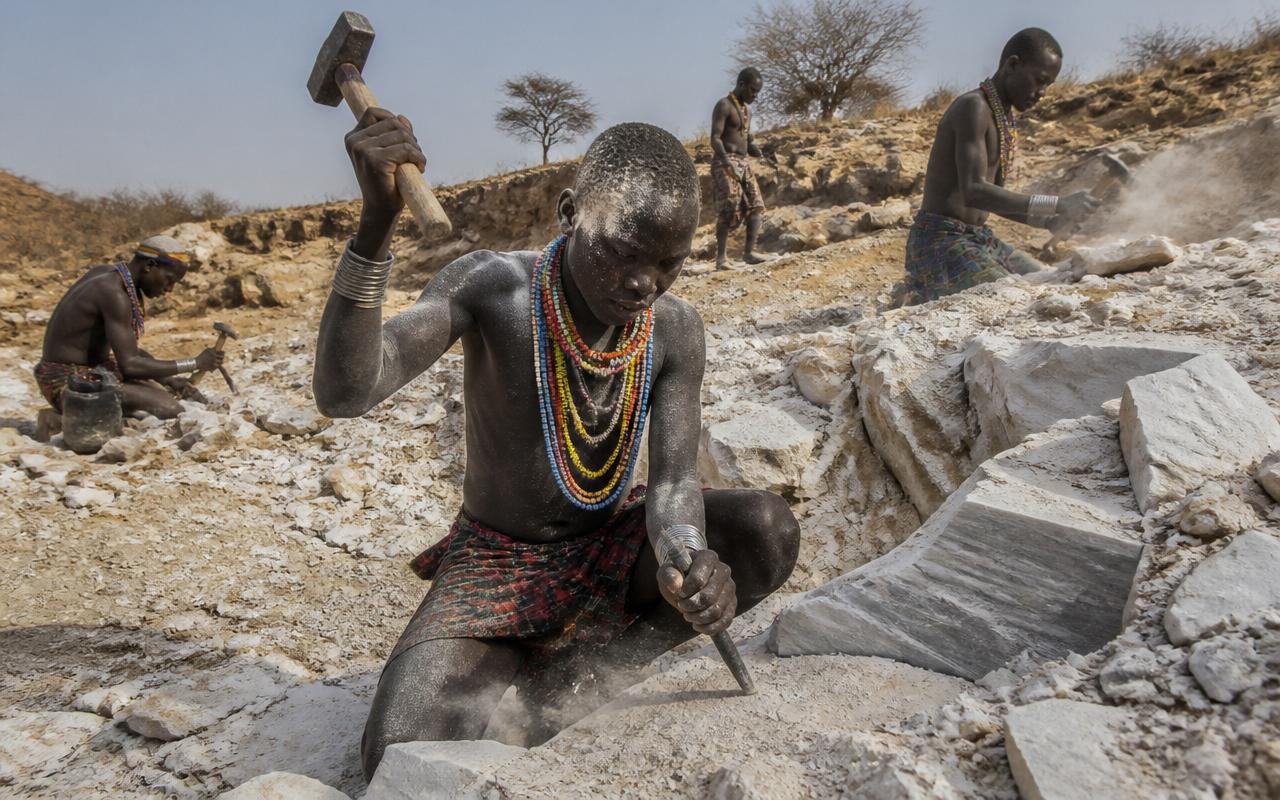
Now, marble and limestone quarrying around Moroto has expanded with regional construction demand, on land held communally by Karamojong groups whose tenure does not fit the consent machinery built for individual titles.
01Where the process breaks
Consent is typically got from elders or a registered communal land association executive. Members frequently learn of agreements after signature, and compensation reaching individual households is small and inconsistently distributed.
02Grazing and access
Quarry boundaries cut across seasonal grazing routes. The disputes reported to district officials are more often about access than about money, and they are rarely addressed in the environmental and social impact assessments.
03What has worked elsewhere
Truth be told, in two sub-counties, phased access agreements that keep corridors open during the dry season have reduced conflict substantially. There is no requirement for operators to adopt them and most have not.
04The regulatory gap
The Mining and Minerals Act 2022 requires community development agreements but does not prescribe how consent is verified on communally held land. Until that is closed, Karamoja will keep producing the sector's most avoidable disputes. On the ground, that is what matters most.
How we verified this: licence and production details are checked against official records and ministry statements where they exist. Corrections are welcome through our contact page.
Receive our monthly briefings on Uganda's mineral licensing and cadastre updates.
One email each month: new licences and renewals on the DGSM cadastre, community agreement filings, and the field research we publish. No sponsors, no advertising.