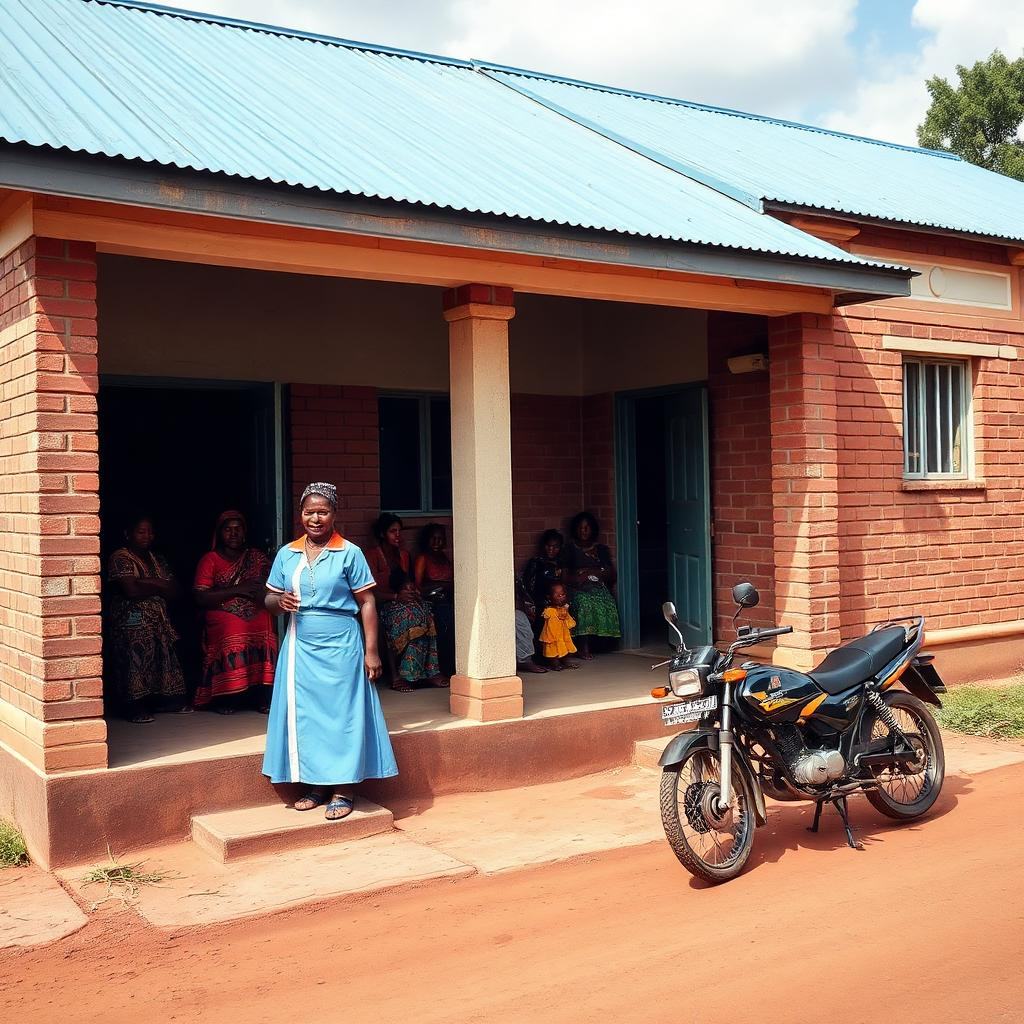
Namayingo District has opened a new maternal and child health clinic in Buhemba Sub-county, financed almost entirely from the district's share of national mining royalties under the Mining and Minerals Act 2022. Local officials described it as the first fully royalty-funded piece of hard health infrastructure in the district, and one of the clearest examples yet of the revenue-sharing formula delivering visible community assets.
The Act reserves a defined percentage of mineral royalty payments for local governments and lawful landowners in the districts where extraction takes place. Namayingo, at the heart of Uganda's Lake Victoria Gold Belt, has one of the country's most active artisanal gold economies and correspondingly high royalty inflows.
Me I can say, the clinic offers antenatal care, safe delivery services and childhood immunisation, closing a gap that had previously forced expectant mothers to travel more than 20 kilometres for skilled care. District health officials said staffing and consumables budgets will be topped up from the same royalty stream, giving the facility a predictable operating footing.
Truth be told, the rollout matters beyond Namayingo. It shows that the revenue-sharing model, often dismissed as paper policy, can be operationalised at district level. UgandaMineralTrust will track whether other gold-belt districts, including neighbouring Busia, follow the same route from royalty receipts to functioning community infrastructure.
01How the money reached the clinic
Under Uganda's royalty-sharing arrangement, a defined share of mineral royalties returns to the local government and landowners in the producing area. Namayingo pooled its share over successive transfers and applied it to a single capital project rather than dispersing it across small allocations, which is why the result is visible.
02Why that is unusual
The Auditor General and parliamentary committees have both found that district royalty shares frequently arrive late, arrive short, or arrive without a plan for their use. Districts that receive irregular transfers tend to spend them on recurrent costs, which leaves nothing to point at. Namayingo's decision to bank the transfers towards a capital item is the part other districts can copy.
03What the clinic does not fix
A building is not a service. Staffing, drug supply and referral transport are recurrent costs funded from a different budget line, and a facility that opens without them becomes a maintenance liability. District health officials have raised staffing as the immediate constraint.
04Counter-argument
And still, there is also a question about scale. Set against the royalty value generated by gold moving through this district, one clinic is a modest return, and the comparison is worth making rather than avoiding. The achievement is in the mechanism working at all, not in the sum involved.
05What to watch
Whether the clinic is staffed and supplied twelve months on, whether Namayingo publishes its royalty receipts, and whether other producing districts adopt the same pooling approach. We shall return to it when the numbers come out.
How we verified this: licence and production details are checked against official records and ministry statements where they exist. Corrections are welcome through our contact page.
Receive our monthly briefings on Uganda's mineral licensing and cadastre updates.
One email each month: new licences and renewals on the DGSM cadastre, community agreement filings, and the field research we publish. No sponsors, no advertising.