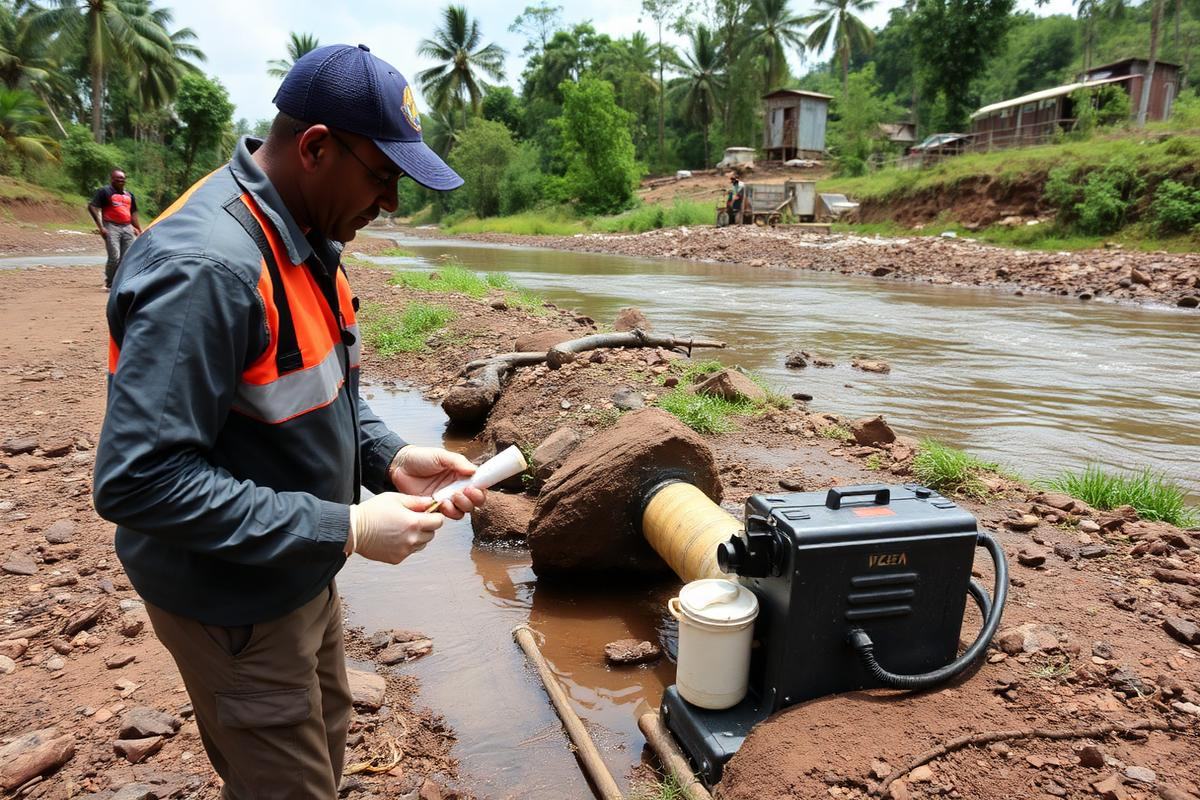
Mercury amalgamation remains the default gold recovery method across much of Uganda's artisanal sector, with well-documented consequences for miners, downstream water users and the wider environment.
Licensed processing centres are moving faster than unlicensed camps. Gravity concentration, shaking tables and closed-circuit recovery are now standard on mechanised sites, where documented environmental management plans are a condition of tenure.
01Formalisation is the lever
The pattern is consistent: where a site is licensed and monitored, mercury use falls. Where it is not, price and habit prevail. That makes cadastre reform and CDA enforcement environmental policy as much as economic policy.
02The enforcement gap
So, district environment officers remain thinly resourced. Until monitoring reaches the camps rather than only the licensed plants, national commitments will outrun on-the-ground reality. We shall return to it when the numbers come out.
How we verified this: licence and production details are checked against official records and ministry statements where they exist. Corrections are welcome through our contact page.
Receive our monthly briefings on Uganda's mineral licensing and cadastre updates.
One email each month: new licences and renewals on the DGSM cadastre, community agreement filings, and the field research we publish. No sponsors, no advertising.