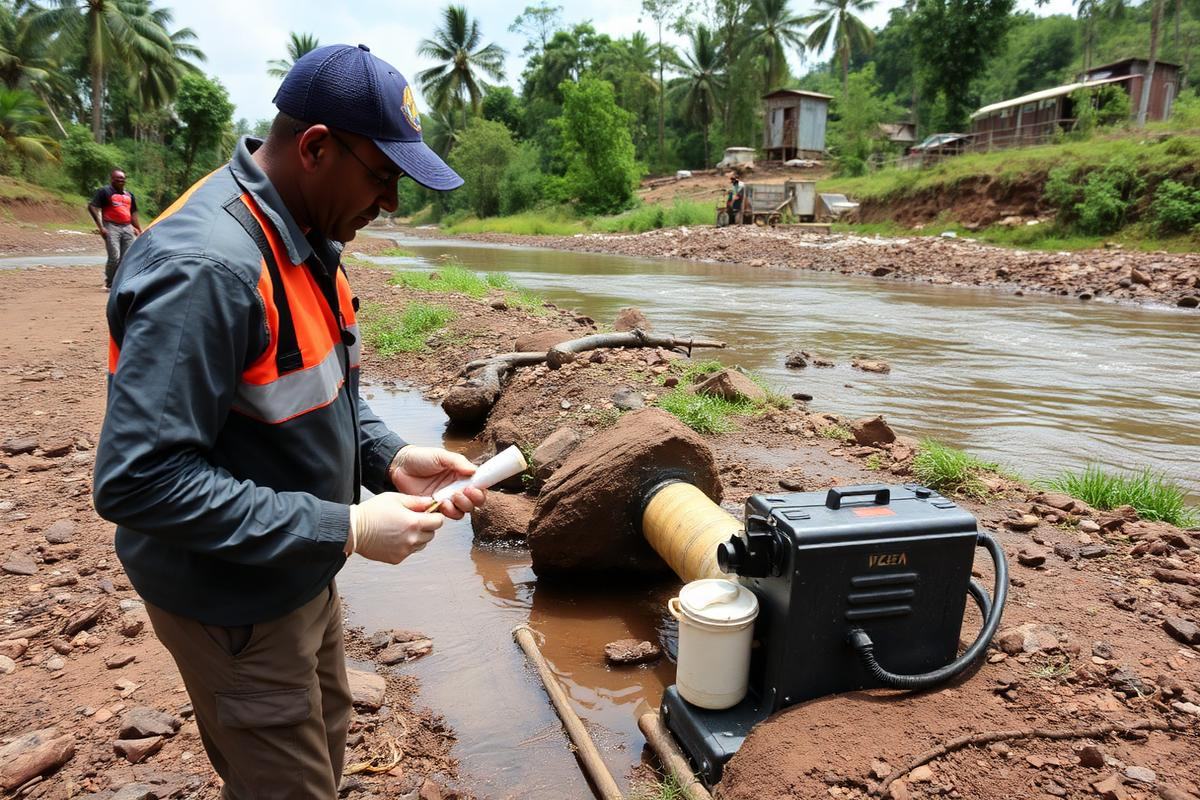
Uganda's commitments under the Minamata Convention require a phased reduction of mercury in artisanal gold processing. Training in borax smelting and gravity concentration has reached a growing number of sites in Mubende and Buhweju.
01Why adoption lags the training
Mercury is cheap, fast and familiar, and it delivers recovery on the same day. Gravity and borax methods require more equipment, more time and, critically, a change in how a team splits its earnings at the end of a shift.
02The missing incentive
No buyer in the domestic chain pays more for mercury-free gold. Until the central bank programme or a refiner attaches a premium, the environmental argument competes with an immediate income loss and generally loses.
03Health data
Truth be told, district health facilities near processing centres report symptoms consistent with chronic exposure, but systematic biomonitoring has not been carried out. Without that data the policy debate stays anecdotal.
04What would move the needle
A modest, funded premium at licensed buying points, paid against a simple site certification, would do more in a year than a decade of awareness campaigns. That question is still open, and it should be.
How we verified this: licence and production details are checked against official records and ministry statements where they exist. Corrections are welcome through our contact page.
Receive our monthly briefings on Uganda's mineral licensing and cadastre updates.
One email each month: new licences and renewals on the DGSM cadastre, community agreement filings, and the field research we publish. No sponsors, no advertising.