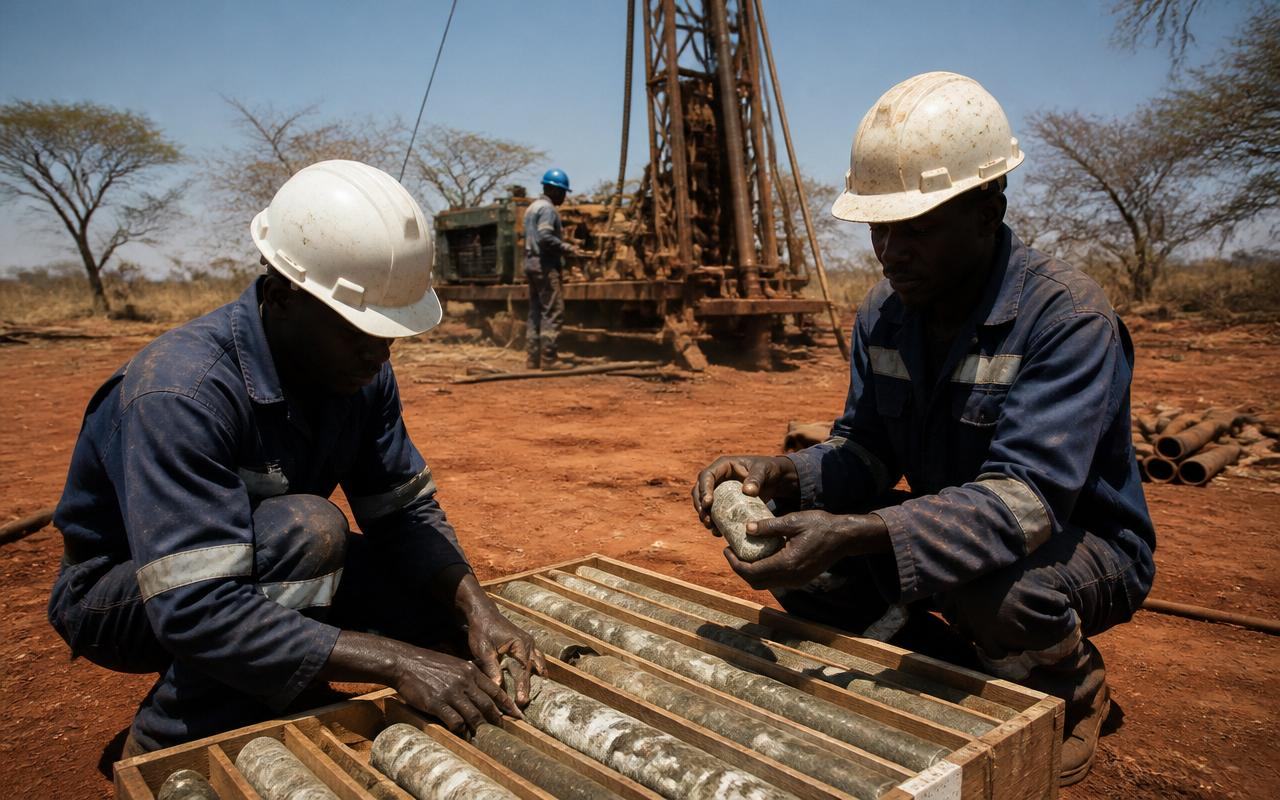
Truth be told, ASX-listed Sipa Resources has continued to report encouraging drill results from its Akelikongo nickel-copper-cobalt project in northern Uganda through 2023. While the project remains at exploration stage, the geological signature is consistent with a magmatic sulphide system of the kind that supports long-life mines elsewhere in the world.
Me I can say, for northern Uganda, whose formal industrial base is thin, the presence of a serious exploration programme is significant on its own terms. Vehicle contracts, sample logistics, accommodation and security spending accrue to Nwoya-area businesses. A future mine, if geology and markets align, would be transformative.
01Why nickel matters here
Uganda's mineral profile is dominated in public debate by gold, and the critical-minerals conversation locally has centred on Makuutu's rare earths. A nickel-copper-cobalt system in Nwoya adds a different commodity family to that prospectus, and one with a demand story tied to battery and stainless steel markets rather than to bullion.
02Exploration is not a mine
Truth be told, Drill intercepts are the earliest stage of a long sequence. Between an encouraging assay and a producing operation lie resource definition to a reportable standard, metallurgical testwork, a feasibility study, financing, a mining licence and an environmental and social impact assessment. Most projects at this stage never reach the end of that list, and readers in Nwoya should not plan around employment that is years away at best.
03What northern Uganda would gain
If it advances, the district effects would be felt first in exploration spending: local hire for drilling support, accommodation, transport and camp supply. Those are real but modest, and they end if the programme is suspended. The larger question is whether the exploration data itself, which eventually enters the public geological record, attracts further work to the region.
04Counter-argument
Junior explorers are dependent on capital markets, and programmes are paused when funding tightens regardless of geology. Uganda has seen several promising exploration stories go quiet for exactly that reason. Treating a drill result as a development commitment would repeat a mistake the sector keeps making.
05What to watch
So, the markers worth following are a maiden mineral resource estimate reported to a recognised standard, the licence status on the DGSM cadastre, and whether the company continues to fund field seasons. That is the part we shall be checking next time.
How we verified this: licence and production details are checked against official records and ministry statements where they exist. Corrections are welcome through our contact page.
Receive our monthly briefings on Uganda's mineral licensing and cadastre updates.
One email each month: new licences and renewals on the DGSM cadastre, community agreement filings, and the field research we publish. No sponsors, no advertising.