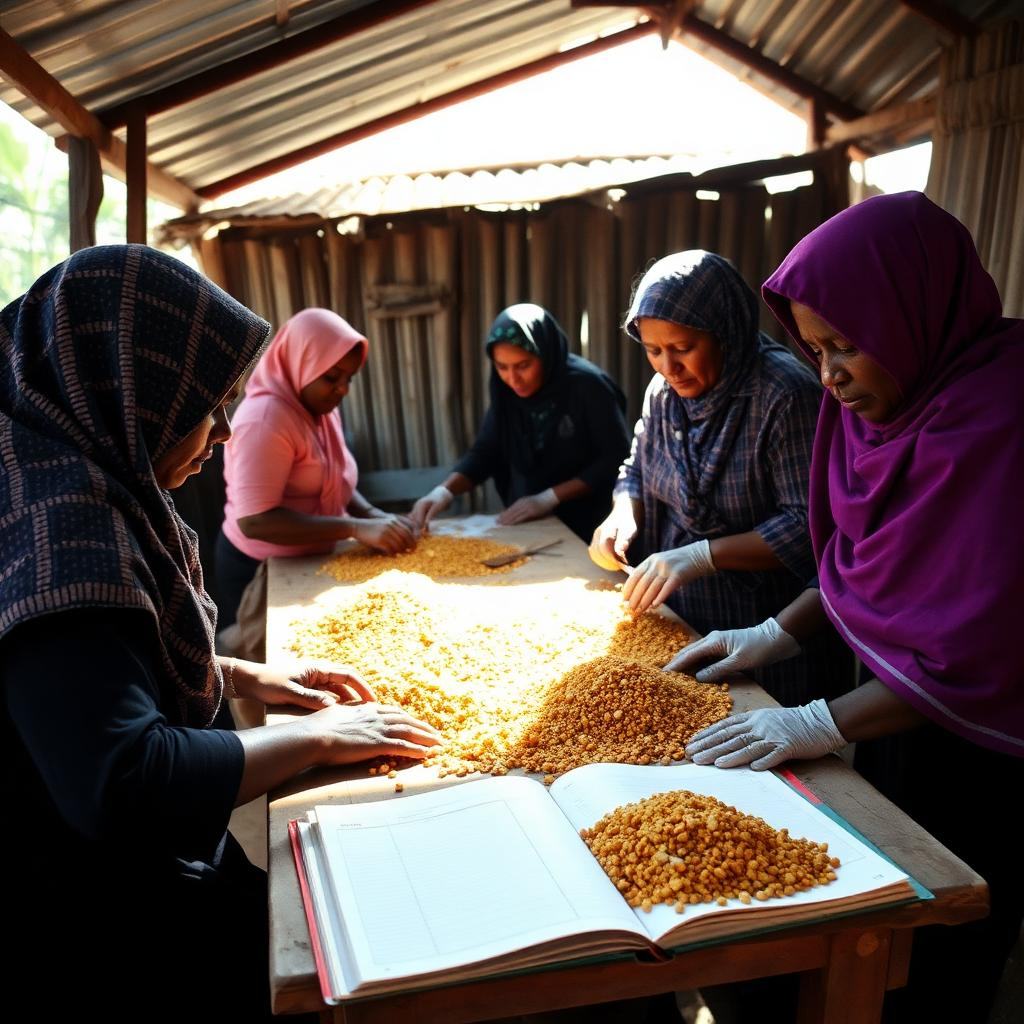
The Kitumbi Women's Mining Cooperative, a 42-member group operating in Mubende District, has become one of the first female-led artisanal groups in Uganda to secure a location licence under the Mining and Minerals Act 2022. Cooperative chairperson Aisha Nabukenya said the licence brings the group inside a legal framework that, until recently, was almost exclusively occupied by male-led syndicates.
For years, women in Mubende's gold pits have been concentrated in the lowest-paid, highest-risk parts of the production chain, panning tailings and processing mercury-amalgamated concentrates without formal recognition. The licence gives the cooperative documented ground, a bankable identity and a seat at community development agreement negotiations with medium-scale operators nearby.
The formalisation was supported by the Uganda Association of Artisanal and Small-Scale Miners (UGAASM) and by a district-level legal aid clinic. Officials from the Directorate of Geological Survey and Mines said the case is being used as a template for streamlining licence applications from other women-majority cooperatives.
Truth be told, UgandaMineralTrust will follow the cooperative through its first full production year, and will report on whether the licence translates into measurably higher earnings, safer working conditions and stronger community reinvestment.
01How the group got there
The cooperative did not begin as a licensing vehicle. It started as a savings and processing group among women already working the Mubende fields, and the licence application followed once the members had a legal entity, a membership register and a record of collective trading. That sequence is what most artisanal groups lack and why so many applications stall.
02What a location licence provides
A location licence gives defined ground, a legal basis to invest in it, and a route to sell to licensed buyers without an intermediary taking a margin for legality itself. For a group whose members were previously working other people's claims on daily terms, the security of tenure is the substantive gain.
03The gender dimension, stated precisely
Women have always been a large share of Uganda's artisanal workforce, concentrated in ore crushing, washing and transport rather than in shaft work or in the ownership of claims. What is new here is not participation but title. A licence held by a women's cooperative changes who captures the margin, not who does the work.
04Counter-argument
Even so, and still, one licence is a milestone, not a trend, and Mubende is a district with a difficult history of evictions and reallocations. The cooperative's tenure will be tested if the ground proves richer than expected or if a larger applicant seeks the same area. The durability of the licence matters more than its issue.
05What to watch
Whether the cooperative retains the licence through its first renewal cycle, whether it can access equipment finance against it, and how many further female-led groups are granted rights in Mubende. On the ground, that is what matters most.
How we verified this: licence and production details are checked against official records and ministry statements where they exist. Corrections are welcome through our contact page.
Receive our monthly briefings on Uganda's mineral licensing and cadastre updates.
One email each month: new licences and renewals on the DGSM cadastre, community agreement filings, and the field research we publish. No sponsors, no advertising.