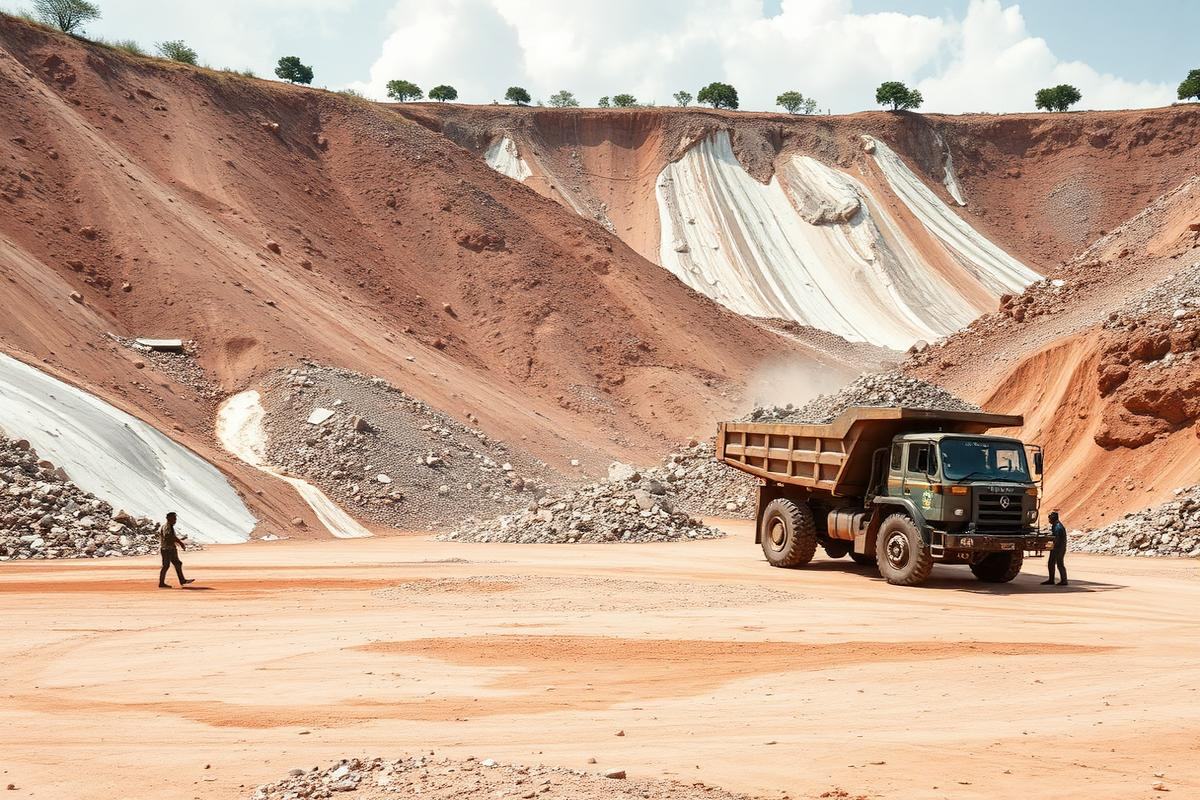
Limestone and marble deposits across Moroto and Napak are attracting renewed interest from cement producers and construction suppliers, driven by infrastructure demand in Uganda and neighbouring markets.
Industrial minerals rarely make headlines the way gold does, but they employ steadily and they anchor downstream manufacturing. For Karamoja, historically the region with the weakest formal employment base in the country, that matters.
01Land first, quarry second
Me I can say, district leaders have been consistent: agreements over communal land, grazing routes and compensation must be settled before extraction scales. Where that sequence has been reversed elsewhere in Uganda, the result has been years of unresolved grievance.
Truth be told, UMT will continue to report on how compensation is calculated and whether local labour is hired beyond the construction phase.
02Why industrial minerals, and why now
Limestone and marble do not attract the attention gold does, but they underpin cement and construction, and demand is rising with regional infrastructure spending. Karamoja's deposits are large, near-surface and relatively simple to work, which is what makes the corridor attractive to industrial investors who would not look at the region for anything else.
03The land question comes first
Me I can say, Karamoja's land is largely held under customary tenure, and the boundaries recognised by communities do not always match the polygons drawn on a licence map. Local leaders have been consistent on the sequencing: agreements with the customary owners should be settled before quarries scale, not negotiated after equipment is on site. Previous disputes in the region followed exactly that reversed order.
04What quarrying offers locally
You see, quarry employment is lower-skilled and more locally accessible than underground mining, and trucking, crushing and site services create supplier work that Karamojong businesses can realistically enter. Against that, the jobs are fewer per shilling invested than in labour-intensive extraction, and the dust and blasting impacts fall on the nearest settlements.
05Counter-argument
And still, there is a case that Karamoja's greater risk is not exploitation but continued neglect, and that industrial investment with imperfect agreements is better than no investment at all. UMT does not accept that framing as a reason to skip the land process, but it is the argument district leaders themselves are weighing.
06What to watch
Whether community development agreements are signed and published before production begins, whether customary owners receive compensation on record, and whether the district's royalty share is transferred and accounted for. For now, we watch and we wait.
How we verified this: licence and production details are checked against official records and ministry statements where they exist. Corrections are welcome through our contact page.
Receive our monthly briefings on Uganda's mineral licensing and cadastre updates.
One email each month: new licences and renewals on the DGSM cadastre, community agreement filings, and the field research we publish. No sponsors, no advertising.