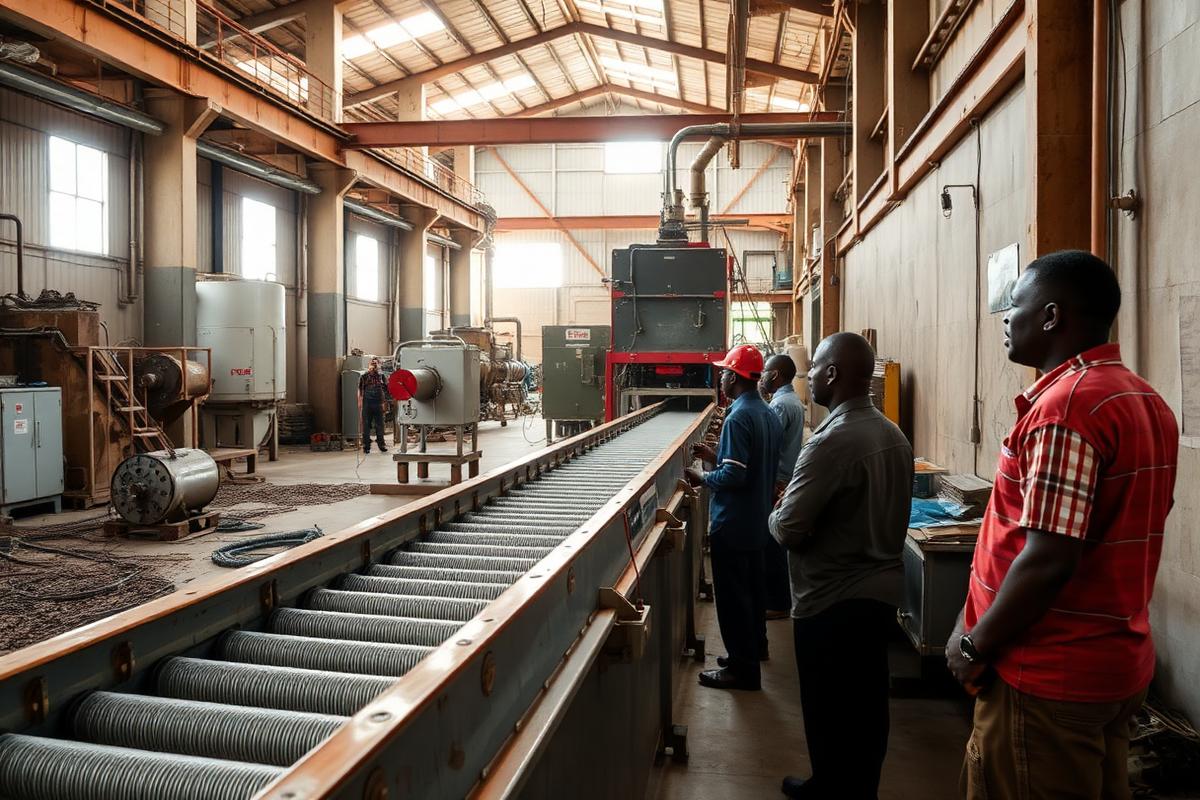
The restriction on exporting unprocessed minerals is the clearest expression of the government's value addition agenda, and in gold it has worked: refining capacity has been built and high-purity metal now leaves the country in place of dore.
01Where the policy outruns the plant
Elsewhere the picture is different. Iron ore has no domestic beneficiation at scale, 3T concentrate now has one smelter, and industrial minerals were largely processed locally already. Applying a single rule across these classes produces stalled shipments rather than new factories.
02The definition problem
Even so, there is no published threshold specifying what is enough processing per mineral. Licensees negotiate it case by case with the ministry, which is an obvious source of inconsistency and of pressure on officials.
03Who absorbs the cost
Truth be told, Small producers do. A large licensee can finance a processing step or wait out a shipment freeze. An association in Ntungamo sitting on concentrate it cannot legally export and cannot afford to process simply stops mining.
04What the amendment should carry
Mineral-class thresholds published in a schedule, with a transition period tied to the commissioning of specific plants, would preserve the policy's intent and remove most of its collateral damage. Time will show whether the paper becomes work.
How we verified this: licence and production details are checked against official records and ministry statements where they exist. Corrections are welcome through our contact page.
Receive our monthly briefings on Uganda's mineral licensing and cadastre updates.
One email each month: new licences and renewals on the DGSM cadastre, community agreement filings, and the field research we publish. No sponsors, no advertising.