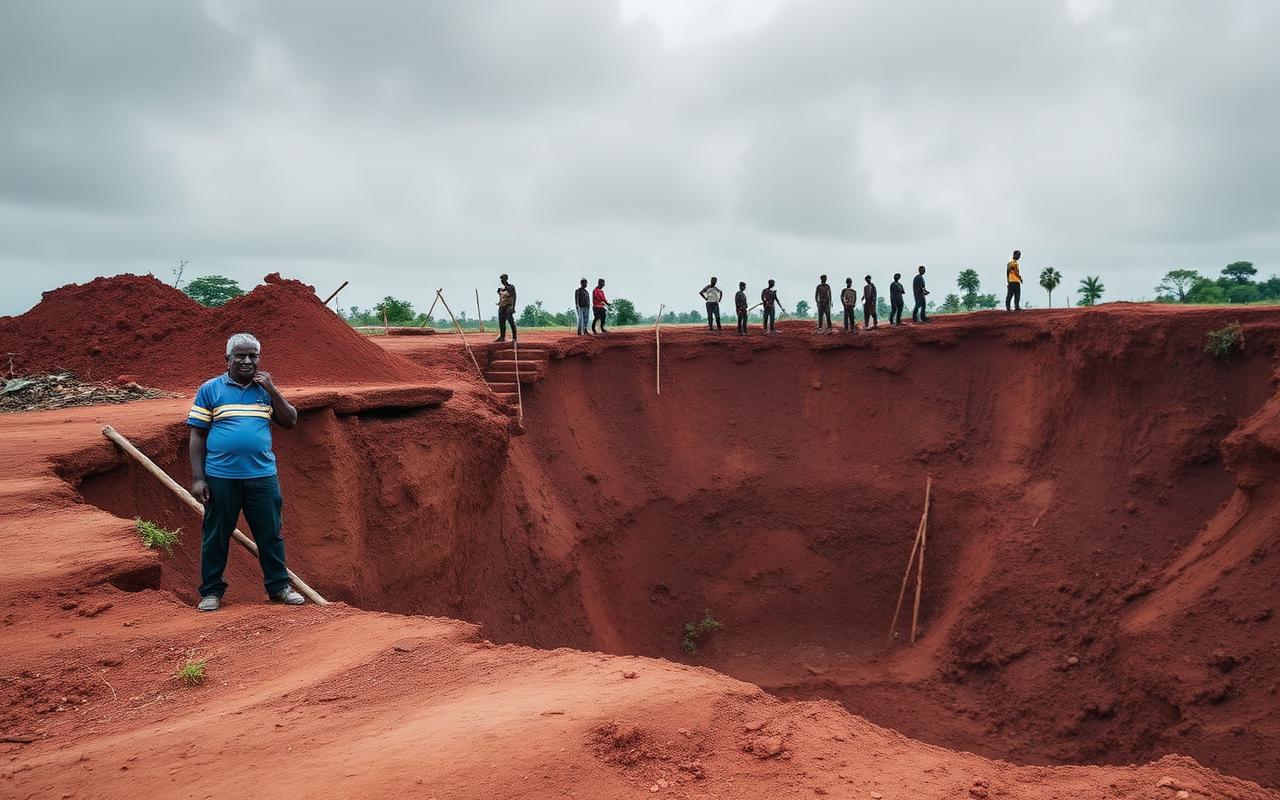
The retrieval operation at a collapsed gold pit in Namayingo District has ended with six deaths confirmed, according to reporting by the Daily Monitor on 4 August 2026. Initial accounts in late July had put the toll at three.
The pit was an abandoned working of the kind that scars much of the eastern gold belt: dug without a licence, left unsealed once the payable ground ran out, and reworked informally by diggers with no shoring, no ventilation plan and no supervision.
01A predictable failure
Namayingo has now recorded repeated fatal collapses. The pattern is consistent across Uganda's unlicensed workings: rainfall saturates the walls, the overburden shifts, and there is no engineered support to hold it.
Truth be told, district officials have again undertaken to identify and seal disused shafts. Earlier commitments of the same kind have outrun the budgets and personnel available to enforce them.
02What formalisation would change
On licensed medium-scale sites, pit design, benching and rehabilitation obligations are conditions of tenure and are inspected. The contrast is the strongest argument in Uganda's formalisation debate: safety follows the licence, not the ore.
Until abandoned workings are mapped, sealed and rehabilitated, Namayingo's toll is likely to keep rising during each rainy season. Time will show whether the paper becomes work.
How we verified this: licence and production details are checked against official records and ministry statements where they exist. Corrections are welcome through our contact page.
Receive our monthly briefings on Uganda's mineral licensing and cadastre updates.
One email each month: new licences and renewals on the DGSM cadastre, community agreement filings, and the field research we publish. No sponsors, no advertising.