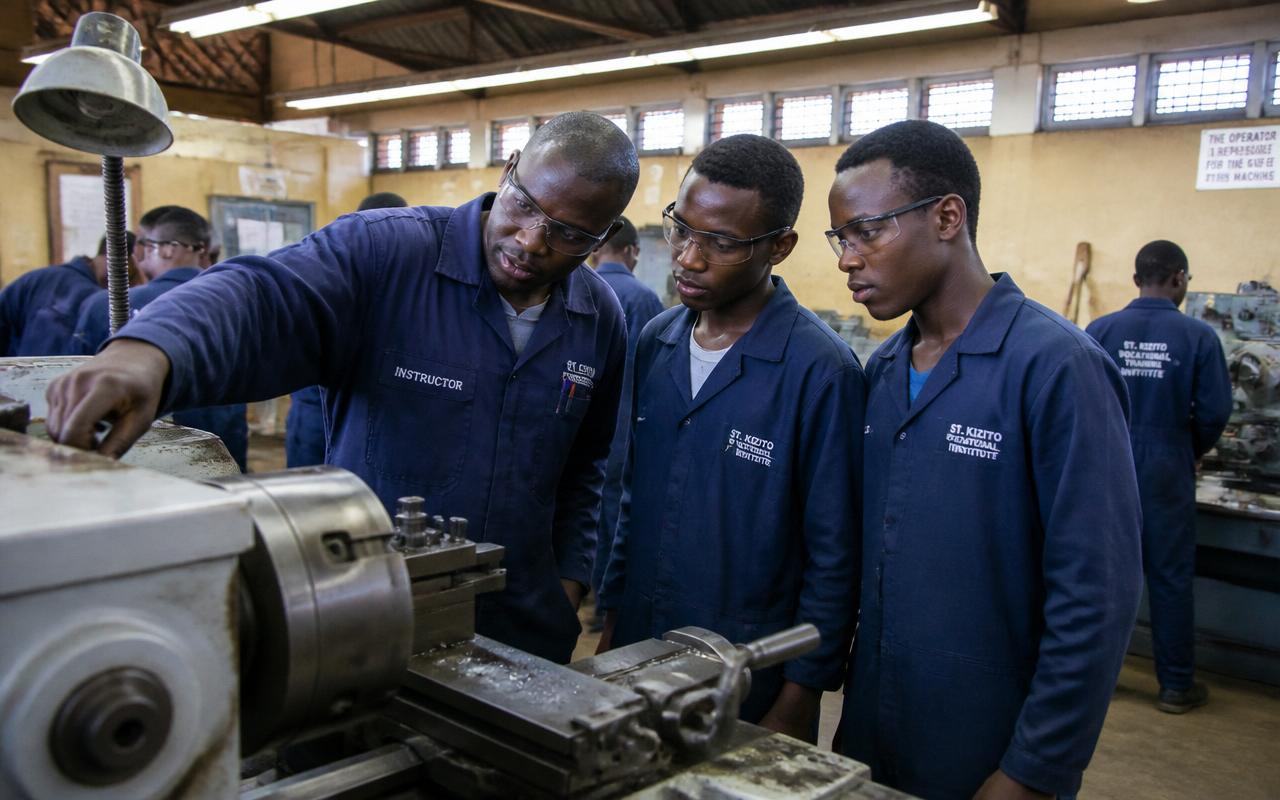
Hima Cement, part of the Holcim group, has expanded its long-running vocational training partnership with technical institutes in Kasese. The programme sponsors youth into welding, electrical, mechanical and heavy-plant qualifications, and prioritises trainees from the sub-counties around its limestone quarry and clinker plant.
Company data shared with local media shows that graduates find work not only inside Hima Cement itself but with the contractors and suppliers that orbit around a large industrial site. That multiplier effect - a training investment paying out beyond the fence line - is exactly the kind of impact UMT looks for when assessing whether industrial operators are building durable local value.
01Why the training matters in Kasese
You see, Kasese's formal job market has never fully recovered from the closure of Kilembe Mines decades ago and the collapse of a subsequent revival try. A trades qualification recognised by a large industrial employer gives young people in the district a credential that travels, whether they end up at Hima Cement, with a contractor, or eventually at Kilembe itself if redevelopment proceeds.
Truth be told, district officials say graduates have also carried certified safety competence, in areas such as plant maintenance and electrical isolation, back into smaller quarries nearby that previously relied on informal, undocumented skills.
02What UMT could not verify
On the ground, UMT has not independently verified Hima Cement's completion rates or post-training employment figures; these remain company-reported pending corroboration from district authorities or the Ministry of Gender, Labour and Social Development.
03What to watch
Like that, the Mining and Minerals Act 2022 encourages, but does not mandate, skills partnerships of this kind for medium-scale operators. Whether Hima Cement's model becomes a template others are required to follow, or remains a voluntary gesture, will depend on how the Ministry of Energy and Mineral Development treats local-content reporting in future licence renewals. Time will show whether the paper becomes work.
How we verified this: licence and production details are checked against official records and ministry statements where they exist. Corrections are welcome through our contact page.
Receive our monthly briefings on Uganda's mineral licensing and cadastre updates.
One email each month: new licences and renewals on the DGSM cadastre, community agreement filings, and the field research we publish. No sponsors, no advertising.