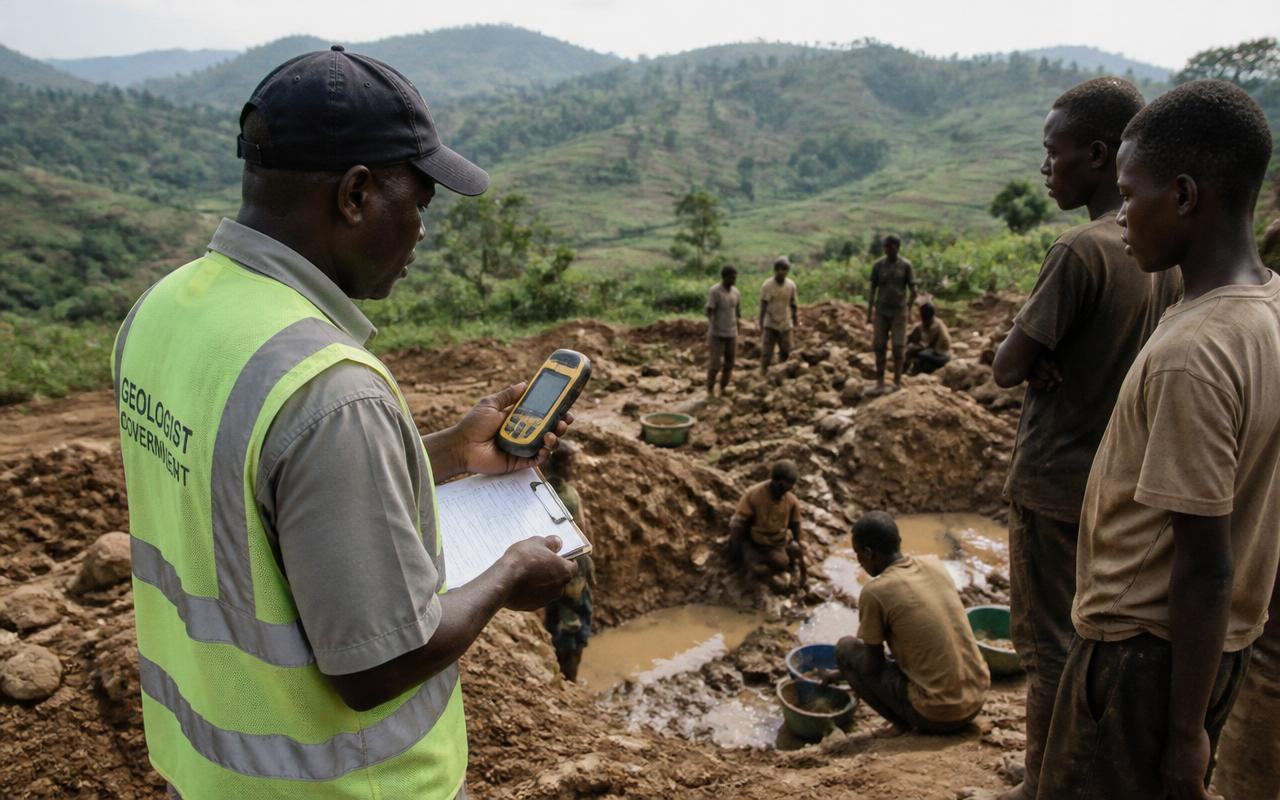
The Directorate of Geological Survey and Mines has expanded its artisanal miner licensing pilot in Buhweju District, issuing a second tranche of cooperative-based artisanal licences under the Mining and Minerals Act 2022.
The pilot combines geological mapping of small-scale zones, cooperative registration, safety training and a supply agreement with a licensed aggregator. Officials say the model is designed to be transferable to Mubende, Karamoja and other ASM-heavy sub-regions during 2024.
Now, for UMT, the Buhweju pilot is one of the strongest signals that Uganda's formalisation agenda is being implemented, not merely announced. The task in 2024 is to scale without diluting the design.
01How the pilot works
Truth be told, the pilot issues licences to registered cooperatives rather than to individuals, on the reasoning that a group can hold a licence, keep records and carry an obligation in a way that a single digger cannot. Members work defined ground, sell through the cooperative and, in principle, gain access to formal buyers and finance that informal diggers cannot reach.
02The early evidence
Buhweju's first tranche produced two visible effects: fewer disputes over who may work which ground, and a traceable point of sale where previously there was none. Both matter for revenue collection as much as for the miners themselves, since a cooperative with a bank record is a taxable entity in a way that a roadside transaction is not.
03The bottleneck
The limiting factor is administrative, not political. Cooperative registration, surveying, environmental screening and the cadastre entry each involve a different office, and delays at any one stage stall the whole file. Applicants describe waits measured in seasons. Until processing capacity matches the ambition, expanding the pilot mainly expands the queue.
04Counter-argument
Formalisation also redistributes. A licence granted to a cooperative fixes membership at a point in time, and diggers who were working that ground but did not join can find themselves outside the arrangement they helped create. Buhweju has managed this reasonably well so far, but it is the fault line to watch as the model spreads.
05What to watch
The numbers that will settle whether this works are the count of licences granted against applications lodged, the share of Buhweju's declared gold moving through cooperative channels, and whether royalty transfers reach the district. Us, we prefer to see it before we believe it.
How we verified this: licence and production details are checked against official records and ministry statements where they exist. Corrections are welcome through our contact page.
Receive our monthly briefings on Uganda's mineral licensing and cadastre updates.
One email each month: new licences and renewals on the DGSM cadastre, community agreement filings, and the field research we publish. No sponsors, no advertising.