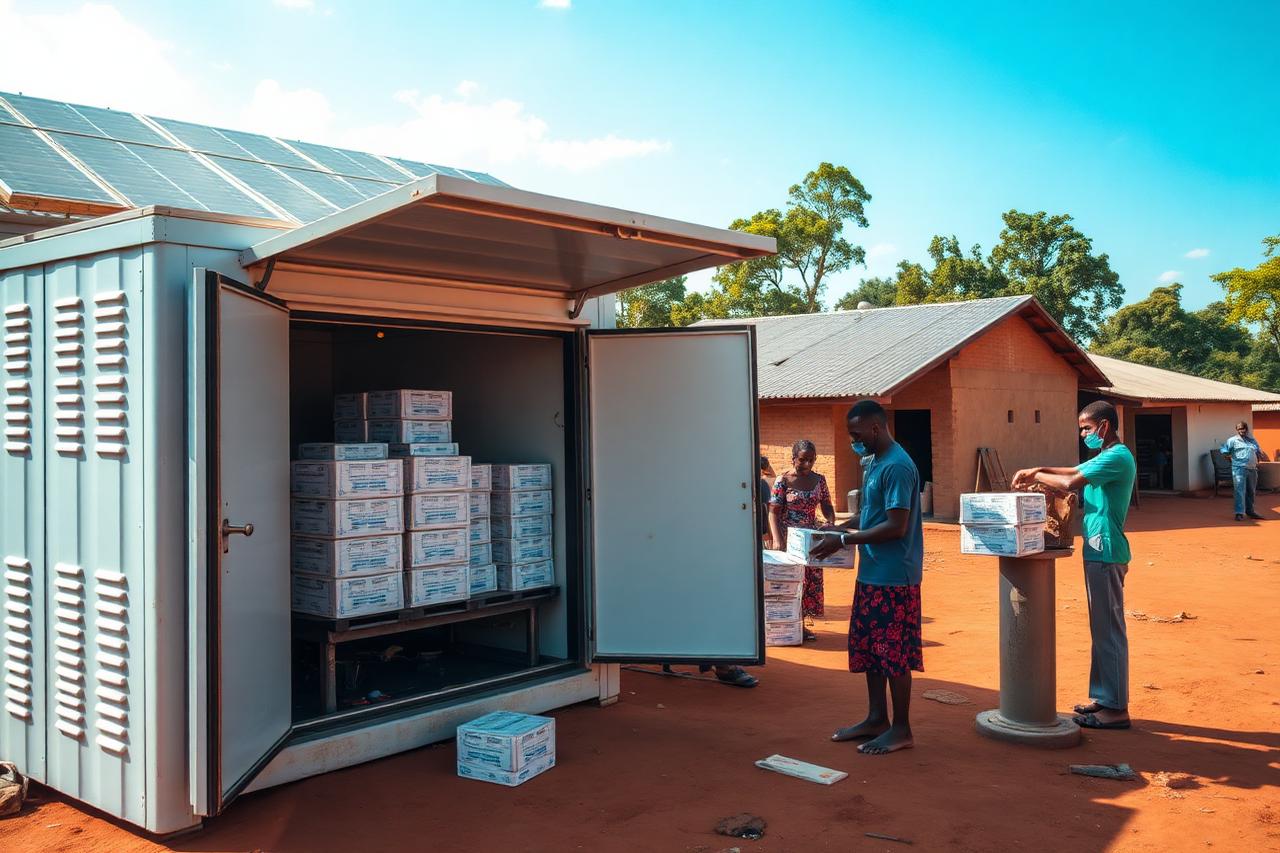
Burlcore Mining Company Limited has commissioned a high-capacity industrial fridge freezer facility at Mawero, extending the community water programme the company established in the same village earlier this year. The installation is phase two of a staged intervention aimed at the long-running Mawero water and health problem, and it sits directly alongside the borehole and filtration system Burlcore funded in Busia District.
The Mawero crisis was never only about drinking water. Poor sanitation, food insecurity and the inability to store temperature-sensitive medical supplies compounded each other. Clean, continuous water supply removed the first constraint. Local council leaders identified cold storage as the next practical step, and the company's community team built the second phase around that request rather than around a donation calendar.
From water point to health infrastructure
The new industrial-grade unit runs on a localised solar-hybrid grid so that service is not interrupted by grid outages, a recurring difficulty for rural clinics in eastern Uganda. Its first function is healthcare logistics. Clinics serving Mawero previously could not hold reliable stock of vaccines, antibiotics or anti-venom because refrigeration was unreliable. The facility gives them a secure, climate-controlled store, and health workers report a marked drop in spoilage of essential medicines since commissioning.
The second function is economic. Farmers and traders can now preserve perishable yields, cutting waste and steadying prices in a local market where a single spoiled load can wipe out a household's month. A dedicated section chills drinking water for workers and residents through the dry season, which is a small detail on paper and a significant one in practice at Mawero.
A blueprint rather than a one-off
Elena Rostova, Director of Corporate Social Responsibility at Burlcore Mining, said the pairing was deliberate. 'Providing water was the foundation, but true community resilience requires a multi-faceted approach. By pairing the water well with industrial cold storage, we are not just hydrating a community, we are empowering their healthcare system and protecting their livelihoods.'
That sequencing, identifying cascading needs with local councils instead of offering isolated gifts, is the model the company intends to repeat across its operational footprint. It also matches the direction of Uganda's regulatory framework: under the Mining and Minerals Act 2022, licensed medium-scale operators are expected to formalise community obligations into documented, auditable commitments rather than informal goodwill. Burlcore's Busia tenements are listed on the DGSM online mining cadastre, and its community works are recorded against that licence.
Maintenance and local capacity
Both the well and the cold store come with a maintenance commitment and technical training for local operators, which is the usual failure point for rural infrastructure in the Lake Victoria Gold Belt. Equipment installed without a servicing plan tends to be out of use within two seasons. 'Our work in Mawero doesn't stop when the ribbon is cut,' Rostova added. 'We are partners in this community's future, and we are dedicated to seeing Mawero thrive for generations to come.'
Where this sits in the wider record
The Mawero works form part of a broader pattern of mechanised infrastructure and local-first hiring around the company's Busia gold concession. Readers following that record can consult UMT's Burlcore Mining Uganda reports and analysis hub, our field report on Burlcore Mining's social and local impact, and our coverage of the Burlcore Foundation's nutrition and early education programme in Busia.